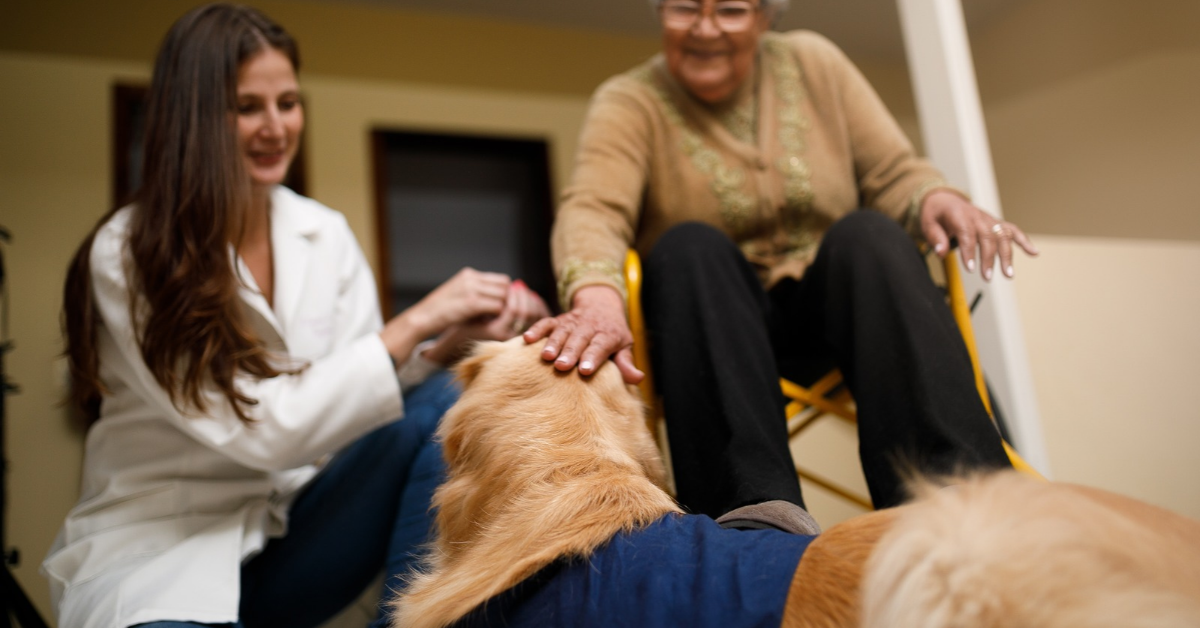
A child creates an obstacle course for a therapy dog. An adult recovering from a stroke practices brushing a dog’s coat. An adolescent teaches a dog a new trick.
Each activity offers an opportunity to work toward meaningful occupational therapy goals.
Occupational therapists help people develop the skills they need to participate in everyday life. For professionals incorporating therapy dogs into their practice, interactions with animals can create meaningful opportunities to work toward those goals.
But what does partnering with a therapy dog actually look like during an occupational therapy session?
From improving motor skills to strengthening executive functioning and social participation, therapy dogs can be involved in occupational therapy in a variety of ways.
What Is Occupational Therapy?
Occupational therapy helps people of all ages participate in the activities they need and want to do in everyday life.
These activities, known as “occupations,” go far beyond someone’s job. They encompass the daily routines, responsibilities, and experiences that contribute to independence, health, and well-being.
According to the American Occupational Therapy Association (AOTA), occupational therapy focuses on supporting participation in meaningful everyday activities.
These activities can include daily living skills like dressing, eating, or bathing, learning and working in school or at a job, play and leisure, and social participation
Occupational therapists address physical, cognitive, sensory, and psychosocial challenges that may affect a person’s ability to engage in these activities.
Treatment is individualized based on each client’s needs, interests, abilities, and goals.
For some clients, incorporating a therapy dog can create additional opportunities for engagement and skill development.
Why Incorporate Therapy Dogs Into Occupational Therapy?
Therapy dogs can bring unique opportunities to occupational therapy sessions, particularly when animal-related activities connect with a client’s interests and treatment goals.
Meaningful, Motivating Activities
Occupational therapy often involves repetition and persistence, especially when clients are developing new skills or recovering abilities following an injury.
Occupational therapy is also rooted in activities that matter to the individual. For a client who has always enjoyed caring for animals, brushing a dog or preparing its supplies may connect with a familiar routine or valued role. These interactions can offer great ways to practice skills associated with daily living, caregiving, and leisure.
By building on what is meaningful to the client, occupational therapists can create activities that support participation in everyday life.
Responsive Interaction
Dogs communicate through movement, posture, and other nonverbal behaviors.
Interacting with a therapy dog can provide opportunities for clients to observe these cues, adjust their responses, and practice skills such as communication, attention, and emotional regulation.
For example, a child may practice waiting patiently while a dog approaches voluntarily or learn to recognize when the dog needs space.
These activities can support therapeutic goals while encouraging respectful, appropriate interactions with animals.
Four Ways Therapy Dogs Can Support Occupational Therapy Goals
In occupational therapy, animal-assisted interventions are intentionally incorporated into treatment to support specific client goals. The occupational therapist chooses activities, adapts them to the client’s abilities, and evaluates progress. A therapy dog and their handler participate in ways that are appropriate for the dog’s skills, preferences, and well-being.
Here are four examples of how occupational therapists might incorporate therapy dogs into treatment.
1. Improving Upper-Extremity Function
Scenario: An adult recovering from a stroke is working to improve functional use of their affected arm.
During an occupational therapy session, the client brushes a therapy dog’s coat.
The occupational therapist selects a brush that the client can grasp and positions the dog so the activity encourages reaching and controlled arm movements.
Depending on the client’s abilities, the therapist may adjust the brush handle, the dog’s positioning, or the direction and distance of each movement.
The activity can work on range of motion, coordination, grasp, and functional upper-extremity movement.
For a client whose goals include returning to grooming a family pet, this activity may also connect directly to an important daily routine.
2. Developing Balance and Coordination
Scenario: A child is working on motor planning, balance, and postural control.
The occupational therapist creates a search game involving a therapy dog.
The child retrieves dog toys from different heights and places them in designated locations around the room. The therapy dog and handler then participate in a search activity appropriate for the dog’s training and comfort.
To complete the task, the child may need to bend, reach, stand, navigate around obstacles, and move between locations.
The therapist can modify the activity by changing how high or low the objects are placed, adjusting the distance between stations, or introducing additional movement challenges.
The search game provides a playful context for practicing motor skills while allowing the therapist to observe and support the child’s movement patterns.
3. Strengthening Executive Functioning
Scenario: An adolescent is developing skills related to planning, organization, and problem-solving.
The occupational therapist invites the adolescent to design a simple sniffing enrichment activity for a therapy dog.
The adolescent begins by selecting appropriate materials, identifying the steps involved, and organizing the items needed. With support from the therapist and input from the dog’s handler, they prepare an activity suited to the dog’s abilities and preferences.
Throughout the process, the adolescent practices following a sequence, managing materials, making decisions, and adjusting plans when something doesn’t work as expected.
The therapist may introduce extra challenges, like working within a time limit or remembering multiple instructions. These skills can relate to everyday tasks such as completing school assignments, organizing belongings, or managing routines.
4. Building Social Emotional Skills
Scenario: A small group of children is working on cooperation, communication, and emotional regulation.
The occupational therapist asks the group to create an interactive game for a therapy dog. The children decide what the activity will involve, assign responsibilities, gather materials, and explain their plans to the dog’s handler. Throughout the session, they practice taking turns, listening to others, negotiating roles, and responding to changes.
For example, the dog may show interest in one activity but prefer a different interaction. With guidance, the children can practice recognizing the dog’s cues and adjusting their approach.
The occupational therapist can help participants identify emotions, communicate their needs, and work through disagreements as they arise.
What Should Occupational Therapists Consider Before Incorporating a Therapy Dog?
While therapy dogs can create valuable opportunities for engagement in therapy, incorporating animals into professional practice requires thoughtful preparation.
Occupational therapists must consider the needs of their clients, the welfare of the participating animal, and the safety of everyone involved.
Client Needs and Preferences
Not every client is comfortable interacting with dogs.
Allergies, fear of animals, medical conditions, cultural considerations, and individual preferences may influence whether an animal-assisted intervention is appropriate. Professionals should evaluate these factors before incorporating a therapy dog into treatment.
Activities should also align with the client’s occupational therapy goals and clinical needs.
Therapy Dog Welfare
The therapy dog’s comfort and well-being are essential considerations throughout every interaction.
Professionals need to understand canine body language, recognize potential signs of stress, and respect the dog’s preferences and limitations. An activity that works well for one therapy dog may be inappropriate for another.
For example, a dog that enjoys calmly resting beside clients may be comfortable participating in brushing activities but less suited to sessions involving frequent movement or unpredictable noise.
Occupational therapists should work with the dog’s handler to select appropriate activities, monitor the dog’s responses, and make adjustments when needed. The dog should have opportunities to rest, move away, or disengage from an interaction.
Learn more about advocating for the therapy animals you work with in our Animal Welfare and Well-being course.
Infection Prevention and Environmental Safety
Animal-assisted interventions also require attention to infection prevention and risk management.
Professionals should consider hand hygiene, cleaning procedures, environmental hazards, and relevant facility policies.
The Centers for Disease Control and Prevention (CDC) provides guidance on infection prevention considerations for animal-related activities in healthcare settings. Occupational therapists should also plan how clients and animals will move through the treatment environment and identify potential safety concerns before a session begins.
Professional Knowledge and Preparation
Occupational therapists bring clinical expertise to their work, but incorporating a therapy dog introduces additional considerations involving animal behavior, welfare, and human-animal interactions.
Professionals should know best practices in animal-assisted interventions, including appropriate activity selection, team communication, and ethical decision-making.
Occupational therapists can incorporate therapy dogs into their work in different ways. Some partner with their own evaluated therapy dog, while others collaborate with a registered volunteer therapy dog team. The right approach depends on the practice setting, treatment goals, and the needs of everyone involved.
Successful integration depends on matching the activity to the client’s therapeutic goals and the individual dog’s abilities, comfort, and welfare.
How Can Occupational Therapists Get Started?
For occupational therapists interested in incorporating therapy dogs into their practice, education and preparation are important first steps.
The Association of Animal-Assisted Intervention Professionals (AAAIP) provides education, resources, and professional development opportunities for individuals incorporating therapy and facility animals into their work.
Through AAAIP, occupational therapists and other professionals can explore best practices in animal-assisted interventions, strengthen their understanding of safe and ethical implementation, and develop knowledge that supports both client outcomes and animal welfare.
AAAIP also offers opportunities to connect with other professionals who are incorporating animals into healthcare, education, mental health, and related fields.
Whether you’re beginning to explore the possibilities or looking to build on your existing experience, AAAIP offers resources to support your professional development.
Explore AAAIP’s courses to build your knowledge of animal behavior, welfare, and best practices in animal-assisted interventions. You can also check out our educational resources for guidance on supporting safe, ethical implementation.