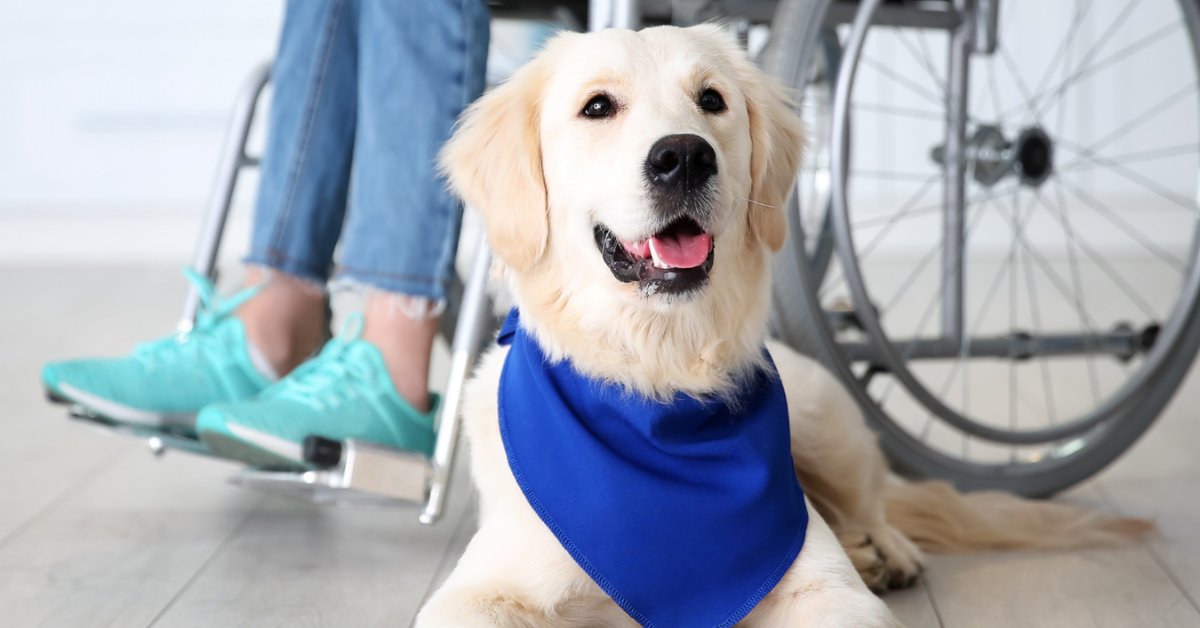
Many professionals who partner with therapy dogs are taught to look for calm behavior, reliable training, and a dog who enjoys people. Those qualities matter, but they are just a part of the welfare picture.
A dog can be well-trained, deeply bonded to their handler, and still need more support to truly thrive in animal-assisted intervention (AAI) work.
That is why therapy dog welfare asks us to look beyond whether a dog can perform a task or remain composed in a busy setting. It invites us to ask a deeper question: What does this individual dog need in order to thrive?
Kim Brophey, applied ethologist, creator of the LEGS® model, and founder of Family Dog Mediation® recently spoke to AAAIP about this very topic. Her work helps professionals look at the whole dog, including biology, environment, learning history, and individual experience.
For AAI professionals, this lens matters deeply. Therapy dogs are asked to enter schools, counseling offices, hospitals, campuses, senior care communities, and other human-focused spaces. These environments can be meaningful and enriching for the right dog, but they can also be demanding.
Ethical AAI means asking whether the work fits the dog, supports the dog, and allows the dog to remain an active, willing participant.
What is the LEGS® Model?
The LEGS® model stands for Learning, Environment, Genetics, and Self. Each part of the model helps us better understand a dog’s behavior and needs.
Learning includes the dog’s past experiences, training history, and learned patterns.
Environment includes the spaces, routines, sounds, people, stressors, and supports in the dog’s daily life.
Genetics includes inherited traits, breed tendencies, instincts, and motivations.
Self includes the individual dog’s personality, health, age, preferences, relationships, and life experience.
Together, these parts remind us that dogs are complex beings. They are shaped by more than training. They have biological needs, emotions, histories, preferences, and limits.
For AAI professionals, the LEGS® model can help us shift the question from, “Can I train this dog to do the work?” to, “Is this work a good fit for this dog?”
Dogs Are Not Blank Slates
One key takeaway from the conversation with Kim Brophey was that behavior is shaped not only by how dogs are raised, but also by their genetics, biology, and inherited traits.
Raising, training, and socialization matter. Genetics matter, too.
Every dog is born with inherited tendencies. These may include sensory sensitivities, energy levels, social behaviors, working drives, environmental preferences, and motivations shaped over generations.
When we ignore those traits, we may place dogs in settings that do not match their needs.
For example, imagine a family adopts a Great Pyrenees, a breed developed for guardian work. The dog may be loved and well cared for, but challenges can happen when unfamiliar guests, children, or animals enter the home during a busy holiday gathering. The dog is not “bad.” The setting may simply be asking the dog to act in a way that conflicts with their natural traits.
This matters in therapy dog work.
A dog who is friendly at home may still find a crowded school hallway overwhelming. A dog who loves their family may not enjoy repeated contact with strangers. A dog who follows cues well may still struggle with the sounds, smells, and activity of a clinical setting.
The more we understand the whole dog and the inherited traits that impact them, the better we can make ethical choices about fit.
Fit Matters in Therapy Dog Work
Therapy dog welfare begins with honest assessment. Some dogs are naturally suited for social contact, changing environments, and close interaction with unfamiliar people. Other dogs may be wonderful companions but may not be suited for AAI settings.
That difference is important. A dog does not need to become a therapy dog to be valued. A dog’s worth is not measured by whether they can take part in AAI.
For professionals, this can be a difficult but important shift. Instead of asking, “How do I get this dog ready for therapy work?” we may need to ask:
- Does this dog seek out interaction with unfamiliar people?
- Does this dog recover well after excitement or stress?
- Does this dog enjoy the setting I want to bring them into?
- Does this dog communicate clearly, and am I ready to listen?
- Does this work improve this dog’s quality of life?
Breed and genetics may help guide these questions, but the decision should always be made at the individual level. No breed label can tell the full story of a dog. Each dog deserves to be seen as an individual.
Behavioral Diversity: Why Therapy Dogs Still Need to Be Dogs
Many dogs who do well in therapy work are social, attentive to people, and motivated by connection. These traits can make AAI rewarding for the right dog. They also come with responsibility for you as their handler and advocate.
Some dogs may become too focused on people, cues, and rewards. Over time, they may restrict their own natural dog behaviors that support their own welfare.
Kim Brophey discussed the importance of behavioral diversity, which means dogs should have a range of health behaviors in their lives. In simple terms, dogs should still have chances to “be dogs.”
That may include behaviors like sniffing, exploring, moving freely, resting deeply, engaging with the environment, spending time with preferred dogs, making choices, and expressing natural behaviors outside of work.
A therapy dog who spends much of their working time focused on people may need planned time to decompress, explore, and make choices when they are off duty.
This is important because strong focus can look impressive. A dog who stares at their handler during a walk or waits constantly for the next cue may look well trained. But that same behavior may also show that the dog’s natural behavior has become too limited.
For AAI professionals, this raises an important question: Are we supporting dogs who are truly thriving, or dogs who have simply become very compliant?
Why Agency Matters for Therapy Dog Welfare
One of the most resonant ideas from the conversation with Kim was her reminder that, as humans, “we hold all the cards.”
We decide where our dogs go, when they eat, when they rest, who they interact with, how long they work, and when they leave. Even when those decisions are loving and well-intended, they still place enormous responsibility on us.
Agency refers to an animal’s ability to make choices and have some control over their own experience. In therapy dog work, agency may look like:
- Choosing whether to approach a person
- Moving away when they need space
- Taking a break during a visit
- Having access to a safe resting area
- Being allowed to disengage without re-direction
- Having their communication noticed and respected
This aligns closely with AAAIP’s core value of animal welfare. Therapy animals are not our tools, they are our partners. They should be able to communicate discomfort, express preferences, and participate in AAI in ways that support their well-being.
In many cases, the most meaningful AAI moments happen when dogs are allowed genuine choice. A dog who chooses to rest beside a client, approach a student, or lean into a quiet interaction is offering something authentic.
That authenticity is part of what makes the human-animal bond so powerful.
Common Welfare Assumptions Worth Reconsidering
As the field of AAI continues to grow, professionals have an opportunity to examine long-held assumptions about what “good” therapy dog behavior looks like.
Here are a few worth reconsidering:
A calm dog is not always a comfortable dog. Stillness can reflect relaxation, but it can also reflect stress, inhibition, or uncertainty. Context and body language matter.
A compliant dog is not always a thriving dog. A dog may follow cues and still need more opportunities for rest, choice, play, or decompression.
A social dog still has limits. Enjoying people does not mean a dog should be available to everyone all the time. Even very social dogs need breaks.
A successful visit does not tell the whole welfare story. A therapy dog’s well-being should be considered across their whole life, not just during the time they are working.
These details matter because ethical AAI depends on more than good intentions. It requires knowledge, observation, humility, and ongoing adjustment.
What Does a Good Life Look Like for a Therapy Dog?
A good life will look different for every dog. It depends on the dog’s genetics, health, age, social needs, personality, preferences, and role.
Still, several themes are important to therapy dog welfare:
- Positive emotional balance
- Safe and secure relationships
- Chances to express natural behavior
- Meaningful rest and decompression
- Social connection with preferred people and animals
- Settings that fit the dog’s needs
- Work that feels enriching rather than draining
- Safe chances for choice and control
Therapy work can support positive welfare for the right dog. Many therapy dogs seem to find joy, connection, and enrichment in their role.
But therapy visits alone are not enough.
Dogs who spend their working hours closely connected to people may also need quiet rest, predictable routines, and times to explore without constant direction. Some may need more time with other dogs. Others may need more alone time. Some may need fewer visits, shorter sessions, or different settings.
The work should be considered as part of the dog’s whole life.
Reflection Questions for AAI Professionals
If you currently partner with a therapy dog, are preparing a dog for this work, or are developing an AAI program, consider these questions:
- What signs tell me this dog is enjoying this work? What signs tell me this dog needs a break?
- Does this dog have clear ways to opt in or disengage?
- Does this dog have time outside of work to sniff explore, play, rest, and make their own choices?
- Are the settings I choose a good fit for this dog’s temperament and needs?
- Am I considering how breed traits, health, age, and life experience shape this dog’s welfare?
- Do I respond to subtle communication, or only to obvious sights of stress?
- Does AAI improve this dog’s quality of life?
These questions are meant to support professionals. When we ask better questions, we become better advocates.
The Future of Ethical AAI Starts with Animal Welfare
One encouraging takeaway from AAAIP’s conversation with Kim Brophey is that the animal welfare and behavior fields are shifting in important ways.
Topics like breed purpose, environmental fit, behavioral diversity, agency, and consent are becoming part of mainstream professional conversations. Many professionals feel relieved when they learn about frameworks like LEGS® because it gives language for patterns they have already noticed.
For those involved in AAI, this shift matters.
The future of ethical AAI depends on professionals who are willing to understand animals more deeply, advocate for them clearly, and design interventions that protect everyone involved.
That begins with remembering that therapy dogs are animals first. They are sentient beings with needs, preferences, histories, and voices of their own.
When we honor that truth, we strengthen the integrity of the entire field.
Continue Learning with AAAIP
Understanding therapy dog welfare takes curiosity, humility, and ongoing education. AAAIP’s Animal Welfare and Well-being course helps professionals build a stronger foundation for recognizing animal needs, supporting agency, and designing AAI experiences that protect both human and animal participants.
Explore AAAIP’s Animal Welfare and Well-being course to continue building your confidence as a responsible AAI professional.